Posts

If My Diabetes Devices Were Parts of a Car...

Image
I can't even write this post without shaking my head in disbelief, wondering how such stupidity exists in this world. That first sentence should tell you immediately that this is an insurance company related post. Back in March, I wrote about my challenges in getting my Dexcom CGM sensors approved by Blue Care Network of Michigan. Despite my using these sensors for a few years (but never before dealing with this particular Michigan-based HMO), the insurer declined them as not medically necessary. I wrote a Letter to my Insurance Company and that was shared widely, including on the Huffington Post . Despite telling me that an appeal would be necessary to demonstrate that I met the required criteria, BCN soon changed its mind. A BCN rep actually told me that she received a call from her higher-ups, to "look at my case" again. She did. She saw that I'd been using these Dexcom sensors already thanks to other insurance companies' approvals, and she marked it app...

Ron Swanson's Message For Diabetes Blog Week

Image
This is Diabetes Blog Week , Year 7. The Prompt: Message Monday. Share your message, all about why you blog. Yep, share that story. Everyone's got one. All the many diabetes blogs are sharing their messages, which are pretty consistent on why they got to blogging and what's important to them. Yeah, that's all great. But I'm not currently in the mood to advocate or press my brain into thinking about diabetes more than I have to. Seriously, I do that enough in my day job. On the personal front these days, my message is simple: Fuck you, diabetes . Seriously. These 200+ blood sugars in the past week are kicking my ass, and while I am taking a needed pump break and don't feel discouraged about that, it's getting to me that I'm higher than normal and am just tired of this. I"m somewhat burnt out and not all too keen on going deep. So, for the moment, that's all I want to say. I'll let the dozens of other bloggers go into whatever ser...

Goodbye, Medtronic (From A Once-Loyal Pump Customer)

Image
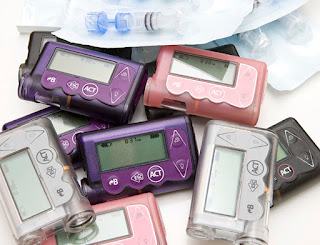
I am mad, sad, confused, conflicted, and utterly disappointed. All because of the recent UHC policy change about making Medtronic it's preferred, exclusive in-warranty pump supplier.  My head has been spinning and my emotions have run the gamut, wondering what I truly think and how this actually affects me. No, I don't have UHC at the moment and I have found the MedT pump the best choice for me. However, I can no longer personally support you as a customer, Medtronic. Photo from A Sweet Life . This is tough for me, both as a patient who likes your pump, but also given the professional hat I wear as a diabetes advocate and journalist covering this industry and topic specifically . Make no mistake, I'm trying to draw a line here between the personal and professional as much as possible. I know both professionally and personally there are good people at Medtronic trying to do good in this world, and I hope this doesn't diminish that. But in the end, I am a pat...

United Healthcare Restricts Insulin Pump Choice

Image
 As insurance companies are increasingly maneuvering to restrict patient choices on all types of diabetes devices and medications, the latest move by UnitedHealthcare to make Medtronic its exclusive in-network supplier of insulin pumps has outraged the patient community. News of this UHC change came in early May 2016, with Tandem Diabetes Care being the first to put out a press release calling attention to the new policy, stating that as of July 1, 2016, adult PWDs (over age 18) covered by UnitedHealthcare will have a much more difficult time obtaining a new, non-Medtronic brand of insulin pump. What's especially frustrating is that UHC buried the information about this change on Page 7 of a 31-page document sent out recently to doctors and patients. It took an industry competitor to blow the whistle, as it were. UnitedHealthcare's new Medtronic policy Here's what you should know: This only applies to traditional insulin pumps -- from Animas, Roch...

Diabetes Device Recalls (Part 4): How to Improve the System

Image
 - - - - - -- - - - - - - - - - - - - - - - - - - - - - - -  Tracking the trends of diabetes device recalls is no easy task, whether you're a regulator, manufacturer, patient or provider -- or even a casual observer of medical device safety. As we've reported exclusively for this DiabetesMine series, we experienced for ourselves just how complicated the system is -- making it nearly impossible to get a clear picture of how safe our devices really are, and what happens if and when a product is recalled. Conspiracy theories sometimes get tossed into the mix (i.e. industry puts "profits over people"), we don’t believe anything nefarious is going on. Rather, most of the failings come with the size and complexities of the system, and the traditional ways that FDA and manufacturers communicate with the public about potential problems and recall actions. It's reassuring to know that FDA really is trying to improve this process. In fact, one of our...

Diabetes Device Recalls: The Role of Lawyers (Part 3 of 4)

Image
  In the world of medical device recalls and safety concerns, we sometimes forget that the legal system is an important part of the mix, that can play a big role in keeping people with diabetes safe. Of course, we shrug off the sleazy-looking TV commercials by lawyers, with their injury hotlines and entire websites devoted to product liability claims. These attorneys are often referred to as “ambulance chasers” and generally aren't considered legit or trustworthy. But the fact is that the courts and lawyers are just as much a part of the system working to monitor medical device safety as the manufacturers, regulators and advocates in this country. Naturally, it's the more dramatic and highly publicized recalls that are most often tied to litigation, like the lawsuits alleging wrongdoing that led to injury or wrongful death levied against diabetes companies Abbott, LifeScan, and Medtronic in the past. Checks and Balances Although we tend to think of the legal...

Diabetes Device Recalls: A Tale of Patient Impact (Part 2 of 4)

Image
D-Mom Polina Bryson remembers when her 9-year-old daughter started seeing numbers on her Abbott FreeStyle meter that didn’t seem right. The blood sugar results were low, but that didn’t jibe with how her daughter was feeling at the time. And those numbers didn’t match up with what their trusty Dexcom continuous glucose monitor was displaying, either. This was in early 2014, about a year after Polina’s daughter was diagnosed with type 1 diabetes. She was using the OmniPod tubeless insulin pump and the integrated Abbott FreeStyle glucose meter that went with it, and they had been depending on the glucose readings from that meter to make dosing decisions. Luckily, when these surprisng low readings began to appear, they had the CGM as an extra layer of security and enough sense to check the girl’s blood sugar on a different meter. That indicated the results were off, and certainly not numbers they should be using to dose insulin and calibrate the CGM. Soon, Polina learned ...